SKATA — HAMAR


The chairs SKATA and HAMAR are key pieces in Icelandic modern design. Designed by Halldór Hjálmarsson, they were the first chairs in the country made using moulded plywood. Their production began a few years after “The Ant” by Arne Jacobsen was released, making them among the first pieces of furniture to draw inspiration from his revolutionary design.
Having studied furniture design in Copenhagen, Halldór drew inspiration from the techniques and forms shaping modern Danish furniture at the time. Building on this foundation, he set out to push these concepts further, weaving in ideas taken from the natural world along with technical enhancements.
SKATA (ray), introduced in 1959, features a feminine silhouette inspired by the skate fish. Its name is a nod to American designer “Ray” Eames. HAMAR (hammer), released in 1961, offers a more masculine profile, drawing on the powerful lines of the hammerhead shark referencing one of Arne Jacobsen’s lesser known chairs named “Hammerhead”. Later, HAMAR became known as “THORSHAMMER,” echoing the shape of the old Nordic symbol.
Together, SKATA and HAMAR embody contrasting feminine and masculine qualities, creating a dynamic interplay that brings balance, movement, and character to any interior.
Halldór refined earlier designs of plywood shells by shifting their narrowest point higher on the backrest. This strengthened the chair while preserving flexibility, creating the distinct human-like waistline seen in both SKATA and HAMAR.
Another defining feature is the use of egg-shaped rubber brackets inspired by skate and ovoviviparous shark eggs, laid in protective egg-cases called "mermaid´s purses". These brackets soften movement and reduce noise when the chairs are handled, contributing to a quieter and more comfortable experience. The chairs are consciously crafted to be lightweight and compact, making them an ideal option where space is limited.
Today, SKATA and HAMAR remain the oldest Icelandic furniture pieces still in production.


HALLDÓR HJÁLMARSSON (1927-2010)
Born into a family of cabinet makers, Halldór trained at his father’s joinery in Reykjavík before studying at the Danish School of Arts and Crafts (1953–1956)
Returning to Reykjavík in 1956, he founded his own furniture company, producing his own designs such as SKATA and HAMAR, and undertaking interior projects, including the iconic Café Mokka, which remains the oldest café in Reykjavík.
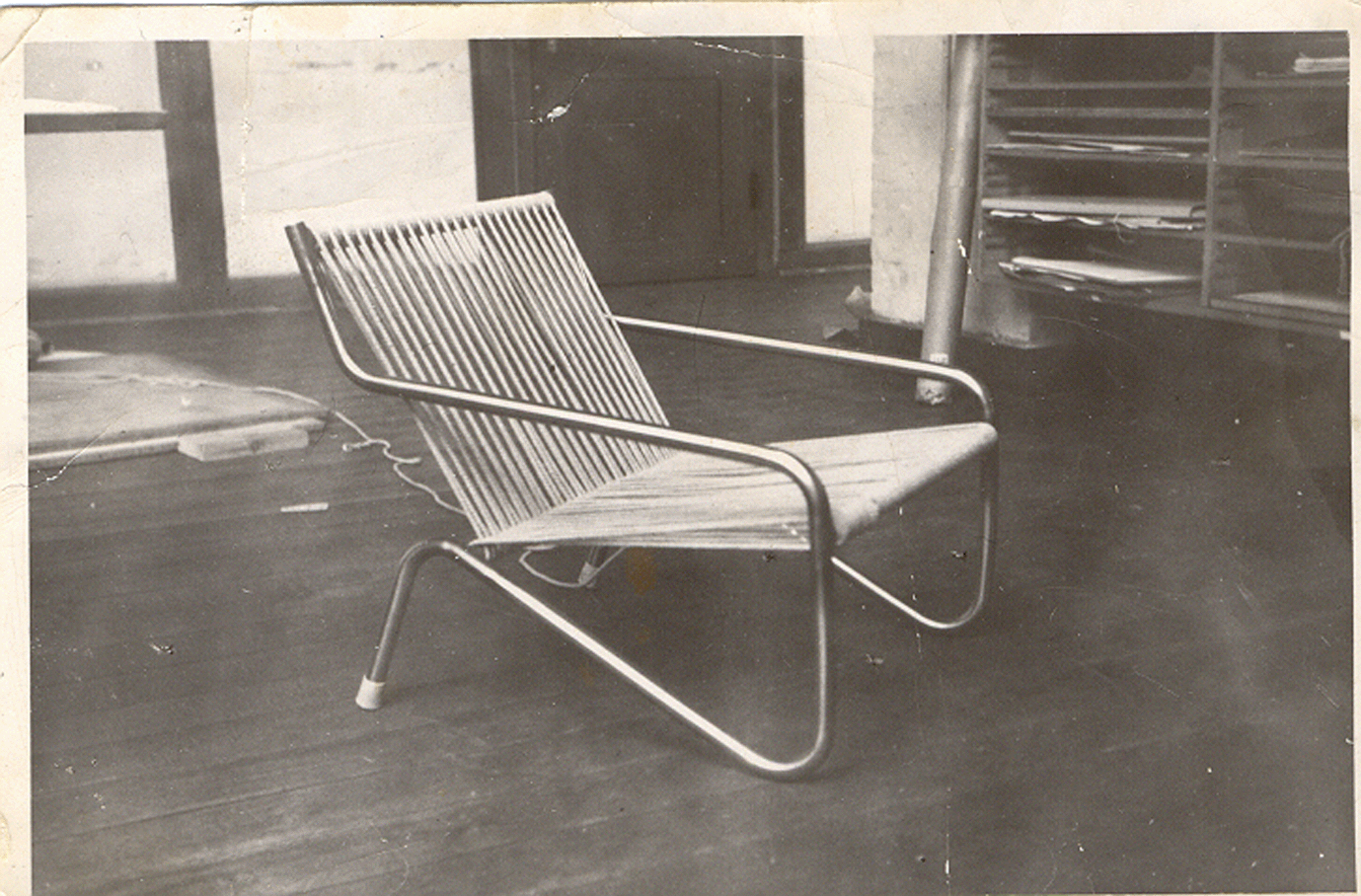
TUBES AND ROPE 1956
Awarded final project at the Danish school of furniture design. Inspired by the works of Poul Kjærholm

"VEFSTÓLLINN" 1958
Inspired by Poul Kjærholm's PK 25 with the aim of simplifying the design. Produced in 1958-1961


SKATA (RAY) 1959
Inspired by Arne Jacobsen's "Ant", but with improved strength and simplified assembly.

WOOD AND CANE 1959
Inspired by the Shaker chairs and the works of his mentor Ejner Larsen. Produced from 1959 until the mid sixties.

BEKKUR 1960
Produced in few samples1961-1962

CHAISE LOUNGE 1961
Prototype - Steel, rope and lambskin.

LOUNGE CHAIR 1961-1962
Designed as part of the interior of The Industry Bank in Reykjavik.

DINING CHAIR 1961
A further developed version of Halldór's earlier design.
Wooden frame and leather.

Here we have Halldór's colleagues and members of the newly founded Icelandic Furniture and Interior Designers Association (FÍHA), each in their own chair.
1. Halldór Hjálmarsson
2. Helgi Hallgrímsson
3. Gunnar Theodorsson
4. Gunnar Guðmundsson
5. Þorkell Guðmundsson
6. Árni Jónsson
7. Kjartan Á. Kjartansson
8. Hjalti G. Kristjánsson
The Furniture Architects Exhibition 1961